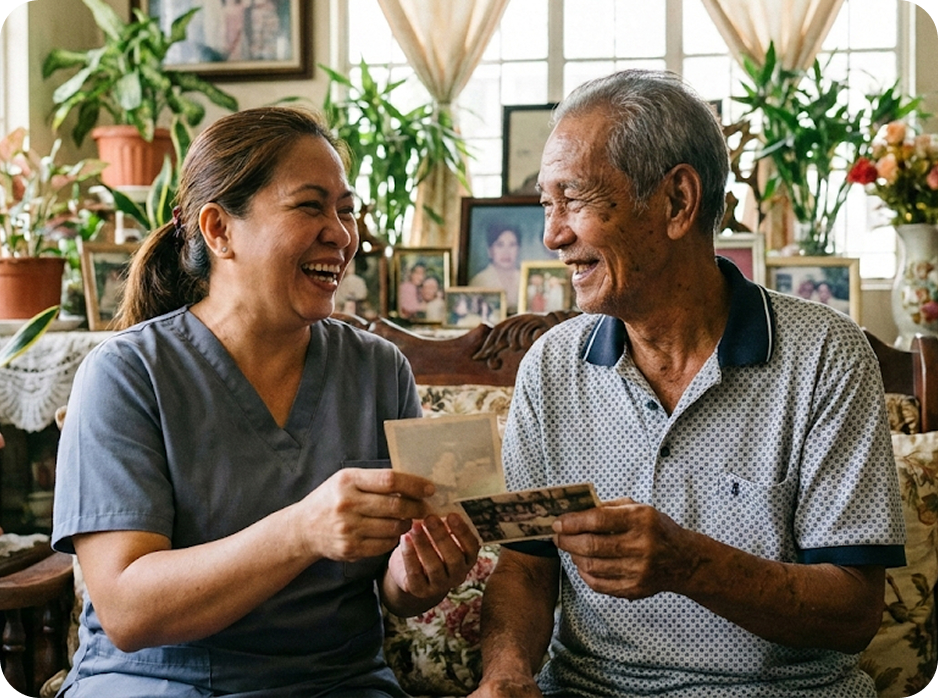
Activities of daily living — bathing, dressing, grooming, toileting, and mobility — carry the most emotional weight in home care. These are moments where privacy, pride, and trust matter most. Carely caregivers approach each routine with patience, moving at your loved one’s pace and never treating these tasks as a checklist to complete.
| THE CARELY DIFFERENCE
“Quietly moves the bag. Continues the routine. No comment, no guilt.” Risk is reduced. Dignity is preserved. The moment passes without becoming an incident. |
Bathing & Personal Hygiene
Bathing is one of the hardest areas to accept help with. Carely caregivers approach it with discretion, clear communication, and respect for modesty. Assistance ranges from setting up towels and water temperature to hands-on support, depending on comfort. We move slowly, explain each step, and pause if something feels uncomfortable. Cultural preferences and gender considerations are always respected. The goal is not to “get it done” — it’s to help your loved one feel clean, safe, and at ease without embarrassment or pressure.
Dressing & Grooming
Getting dressed can become difficult due to arthritis, balance issues, or fatigue. Carely caregivers provide calm, respectful assistance — helping with buttons and zippers, selecting appropriate clothing, or offering steady support while sitting or standing. Grooming is handled with the same care. We remain mindful that appearance is closely tied to self-esteem, and we respect personal style and cultural norms so your loved one feels like themselves, not like a patient.
Toileting & Incontinence Support
Toileting and incontinence care require sensitivity and trust above all else. Carely caregivers handle this support discreetly and respectfully, always prioritizing privacy. Assistance may include help getting to and from the bathroom safely, managing clothing, or maintaining cleanliness. We use preferred language when possible, follow established routines, and never rush or shame. The focus is on maintaining dignity while reducing fall risk and discomfort.
Mobility Assistance & Transfers
Carely caregivers provide steady, attentive support with walking, standing, sitting, and moving safely around the home. This includes getting in and out of bed or chairs, navigating stairs, and moving between rooms. We encourage safe movement rather than unnecessary restriction, and remain attentive to pace, balance, and fatigue. Caregivers explain what they’re doing and respond quickly if something feels unstable — supporting confidence without making movement feel clinical or controlled.
Fall Prevention
Preventing falls often starts with small, everyday adjustments. Carely caregivers keep pathways clear, ensure adequate lighting, assist with footwear, and offer support during higher-risk moments like bathing or nighttime movement. They remain observant without being intrusive. Families are kept informed about observed risks so adjustments can be made collaboratively. Fall prevention is woven into daily care — not treated as a separate intervention.
Morning & Bedtime Routines
Morning and bedtime routines set the tone for the entire day and night. Carely caregivers support these transitions calmly and without rushing. Morning assistance may include getting out of bed, personal care, and preparing for the day. Evening support covers changing clothes, toileting, and settling in for rest. We follow established routines whenever possible — cultural practices, prayer schedules, and household rhythms are all respected.