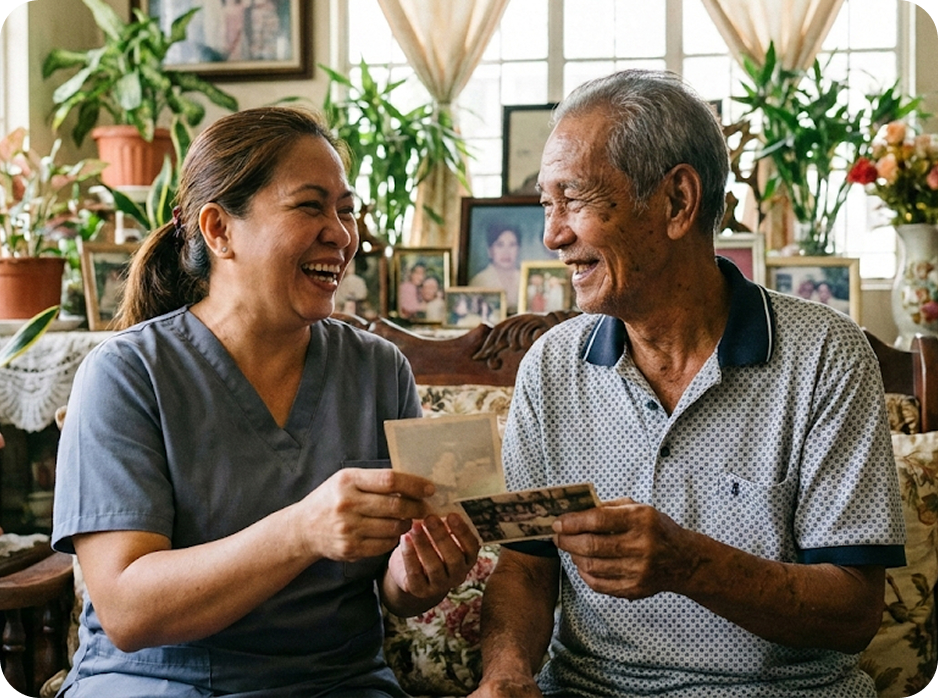
Loneliness often shows up long before physical needs do. Emotional support is not an “extra” — it’s part of staying well at home. Companionship is never forced or performative. It grows through consistency, shared routines, and being attentive to how your loved one actually prefers to connect.
| THE CARELY DIFFERENCE
“Sits quietly. Follows the senior’s lead. Lets connection build without pressure.” Some seniors want conversation. Others want silence. We read the room and respond to what’s actually there. |
Conversation & Presence
Meaningful companionship starts with being understood. Carely caregivers engage in natural, respectful conversation in your loved one’s preferred language whenever possible. This may include talking about daily events, family memories, or shared interests — or simply sitting together quietly. We follow your loved one’s lead, recognize cues, and respect personal boundaries. The goal is steady presence that feels familiar and safe, easing anxiety and helping care feel less like an intrusion over time.
Activities & Social Engagement
Staying engaged doesn’t require a packed schedule. Carely caregivers support simple, familiar activities that align with your loved one’s interests and energy — short walks, listening to music, light activities at home, or participating in cultural or faith-based routines. We avoid overstimulation and never push activities that feel uncomfortable. Engagement is adjusted daily based on mood, health, and preference.
Cognitive Stimulation
Gentle cognitive engagement can help maintain focus, memory, and emotional well-being. Carely caregivers support low-pressure activities that encourage thinking and awareness — conversation, reading together, simple games, or familiar routines that keep the mind active. We do not test, correct, or challenge in ways that cause frustration. Cognitive support is woven into daily life rather than treated as therapy, so seniors feel supported, not evaluated.
Reducing Isolation
Loneliness affects health, mood, and motivation. Carely caregivers help reduce isolation through consistent presence — not constant interaction. For some, it’s conversation; for others, it’s simply knowing someone is there. Caregivers respect preferences for solitude while remaining available and attentive. By showing up reliably and communicating in familiar ways, caregivers help seniors feel less alone and help families feel genuinely reassured.